

Outreach
ctd.qmat’s outreach initiatives engage a broad, international public — especially children and young people — and invite them to discover the world of quantum physics. By presenting quantum research as creative, dynamic, and full of possibility, we spark curiosity and inspire the next generation of students, educators, and researchers worldwide.
Outreach & Engagement
Over 500,000 Downloads: Kitty Q Brings Quantum Physics to Life
The mobile game “Kitty Q — A Quantum Adventure,” available for smartphones and tablets, was developed in collaboration with award-winning app designer Philipp Stollenmayer to introduce young people (11+) to the fascinating world of quantum physics. Featuring a quirky, endearing cat as its main character, the app takes a playful, interactive and accessible approach to a complex topic.
With a particular focus on engaging girls — who remain underrepresented in physics degree programs — Kitty Q lowers barriers to entry and encourages curiosity through storytelling and interactive play. The approach has clearly resonated: the app has surpassed 500,000 downloads worldwide and received numerous awards and nominations. A 2025 scientific study showed that using the app in the classroom boosted students’ motivation for physics.
12,000 Visitors: Following the Trail of Kitty Q
Quantum physics comes to life in Germany’s first escape room dedicated to quantum science for children and teens. Created in collaboration with Technische Sammlungen Dresden (the city’s science museum), Kitty Q — A Quantum Adventure invites visitors into a mysterious box that opens onto a colorful “quantum apartment” with four immersive rooms.
Inside the escape room, participants solve a series of puzzles — available in both German and English — uncovering quantum phenomena along the way and ultimately freeing Kitty Q from her in-between state. With more than 12,000 visitors, the experience has proven a hit with school groups and families alike, whether as a highlight of a class trip or a hands-on science adventure for birthday celebrations.
The experience is complemented by the take-home mini encyclopedia “Kittypedia to Go,” which explains quantum concepts in an accessible way, as well as the short video series “KittyToks,” extending the quantum fun beyond the escape room.
150,000 Views: Quantum Phenomena Explained Simply
In the video series “QUANTube — Short Break Science,” early-career researchers answer physics questions submitted by children and teens. Each episode explains quantum phenomena in a clear, engaging way, making the twelve short videos well suited for classroom use.
Tying in with the motto of Germany’s Science Year 2022 (“Participate!”), QUANTube builds on the success of the mobile game “Kitty Q.” As part of the project, players were invited to submit their own questions to the ctd.qmat team — resulting in more than 2,000 questions from around the world. The concept won the Community Prize for International Research Marketing, and the videos have been viewed over 150,000 times.
50 Stops Worldwide: Women Shaping the Future of Physics
The traveling exhibition “RETHINKING PHYSICS — A Century of Quantum Mechanics: Time for a Female Perspective!” was created for Quantum2025, the United Nations’ International Year of Quantum Science and Technology. It features portraits of established and early-career women researchers whose work and experiences highlight the vital role women play in shaping the field of quantum physics.
Through personal stories and perspectives, the exhibition showcases the enthusiasm, curiosity, and creativity that drive scientific discovery — and offers inspiring role models for the next generation of physicists. In 2025, the exhibition toured more than 50 venues worldwide, including locations in Australia, Germany, Italy, Austria, and the United States.
From the Quantum Lab to the Classroom:
Cutting-Edge Research for Schools
How can quantum research be made accessible starting in middle school? That’s the guiding question behind the “Quantum Physics” thematic cluster, developed in collaboration with MINT-EC, Germany’s national network of excellence schools focusing on STEM subjects.
In this initiative, teachers work closely with researchers from ctd.qmat to create classroom-ready teaching materials on key concepts in quantum physics for lower and upper secondary education. The program combines hands-on activities, digital tools, interactive game stations, and YouTube videos designed to spark curiosity and make learning both engaging and accessible.
The first interactive teaching materials are already available for free download.
-
![Laborverbundneubau-Ifw-Und-Tud-Visualisierung-Awb-Architekten-Dresden]()
Topping Out of Joint Research Building in Dresden
-
![Pressebild-Helmholtz-Preis2026-Kajetanfijalkowski-Fotoptb-1920x1080ctdqmat-De]()
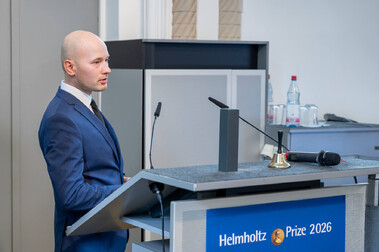
Record Precision in Electrical Resistance: Kajetan Fijalkowski Receives Helmholtz Prize
-
![Maser-Bild-5000x2813]()
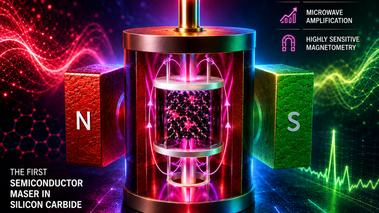
World’s First Semiconductor Maser
-
![Pressebild-Elektronikdielernt-Abbildungjochenthamm-1920x1080]()
Electronics That Learn: Würzburg Team Builds Brain-Inspired Components
-
![Laetitiafarinacci-Fototobiasritz-Webslider]()
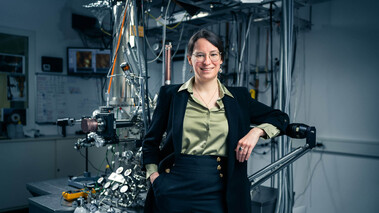
Lego with Atoms: Laëtitia Farinacci Takes Up New Edna Carter Professorship in Würzburg
-
![Sebastianklembt-Fototobiasritz-08851-16zu9]()
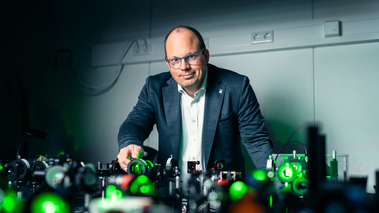
How Light Finds New Paths: Sebastian Klembt Takes Up the Chair of Experimental Physics I in Würzburg
-
![Pressebild-Newtonreloaded-Abbildungkilianneddermeyer-1920x1080]()
Newton Reloaded: Dresden Physicists Go Beyond the Action–Reaction Principle
-
![Ghn-Gruppe-Fototobiasritz-1920x1080]()
Kick-off for the Grete Hermann Career Forge program: Early-career women researchers take charge of their futures
-
![Exzitonen-Auf-Quanten-Welle-Bykilianneddermeyer]()
Riding the Quantum Wave: Quasiparticles Reveal a Magneto-Optical Transport Phenomenon



Press Contact and Downloads
Media Inquiries
Media Resources
Images and materials related to the “Kitty Q – A Quantum Adventure” mobile game and escape room

Katja Lesser
Press Officer & Head of CommunicationsTechnische Universität Dresden

Theresa Kunzelmann
Communicatios Manager WürzburgJulius-Maximilians-Universität Würzburg
Phone: + 49 931 31-88933
Aline Lißner
Communications Manager DresdenTechnische Universität Dresden
Phone: +49 351 463-35765
Email: aline.lissner@tu-dresden.de