
Curtain up for ctd.qmat! We’re celebrating our new name with a custom quantum groove by loop artist Konrad Kuechenmeister.
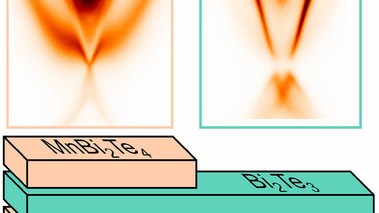
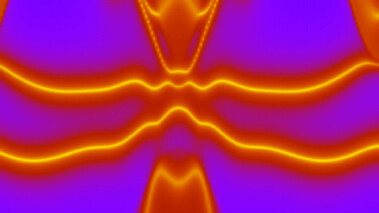
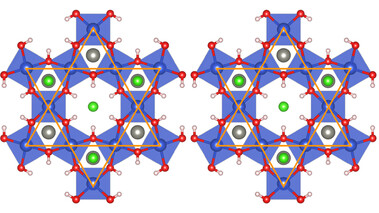
The extraordinary material manganese bismuth telluride is the first topological insulator to exhibit a number of spectacular physical effects due to its internal magnetic field. Now, researchers of the Cluster of Excellence ct.qmat found out which atomic layer has to be on the surface for this to happen. This makes it possible to better control the properties of this quantum material and brings it a little closer to everyday use. For the future, this promises a more energy-efficient technology.
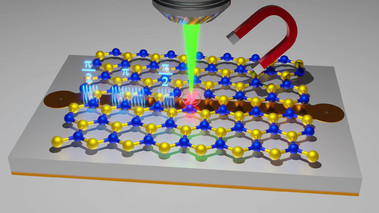
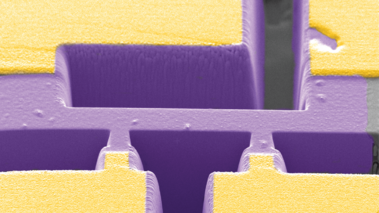
Extremely sensitive quantum sensors have great potential to revolutionize medical imaging, navigation and information technology. An international researcher team led by scientists from the Cluster of Excellence ct.qmat has made a breakthrough that could shorten the path to this goal greatly.
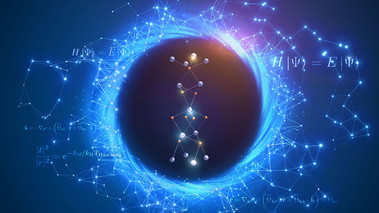
The early career research team leader Tobias Meng launches a three-year research project connecting the physics of semimetals to the theory of black holes. The German-Luxembourg research project has just received funding of roughly one million Euros.
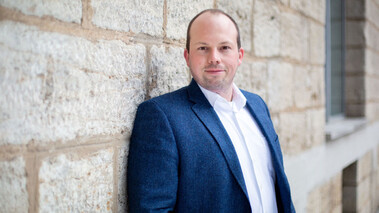
Since a Nature article in 2018, experts have been looking forward to photonic quantum physics from Würzburg. Sebastian Klembt played a key role in the presentation of the first topological isolator made of light and matter. The scientist has been the first junior professor in the Cluster of Excellence since November 2020.
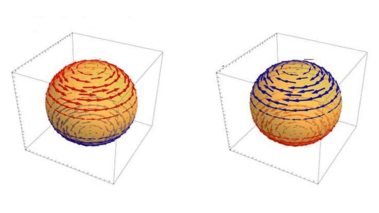
With the help of a novel algorithm, magnetic topological compounds can now be searched for automatically. The computer method developed is considered a milestone for research into topological materials and paves the way for systematic identification of such materials, which have so far only been determined on a case-by-case basis.
Researchers of the Cluster of Excellence ct.qmat have proposed a new quantum material in which electrons move as a viscous fluid – like a kind of quantum honey. If scientists succeed in producing the material in sufficient purity, the effect will be three times stronger than in the “miracle material” graphene.
As part of an international collaboration, the group of Andrew Mackenzie have discovered manifestations of macroscopic quantum physics in ultrapure metals. These results have just been published in Science Magazine.
Physicists of the Cluster of Excellence ct.qmat have discovered spontaneous static magnetic fields with broken time-reversal symmetry in a class of iron-based superconductors. This exceptional property calls for new theoretical models and may become important in quantum computing. The research results have recently been published in the scientific journal Nature Physics.
The group of Professor Ronny Thomale at the University of Würzburg, in joint collaboration with the experimental optics group of Professor Alexander Szameit in Rostock, has developed a light funnel system which might inspire new generations of hypersensitive optical detectors and sensors for future information and communication technologies. Their results have just been published in Science magazine.
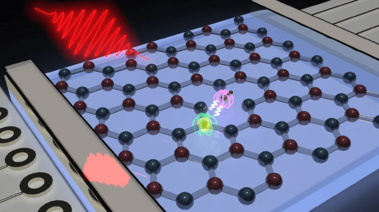
The Dyakonov group observed spin centers for the first time experimentally in 2D-materials. As decribed in Nature Materials, they have potential as possible roomtemperature qbits.
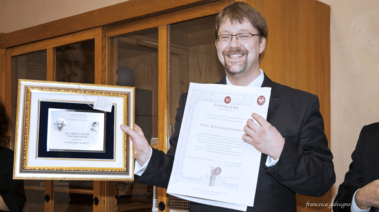
For his groundbreaking research in different areas of fundamental research our associate Alexander Szameit from Rostock University reveives the "Tomassoni Prize" of the Sapienza University Rome.
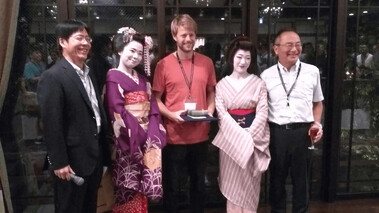
Philipp Schütz wins the poster prize at the "International Workshop on Oxide Electronics" in Kyoto, Japan.