
Curtain up for ctd.qmat! We’re celebrating our new name with a custom quantum groove by loop artist Konrad Kuechenmeister.

News

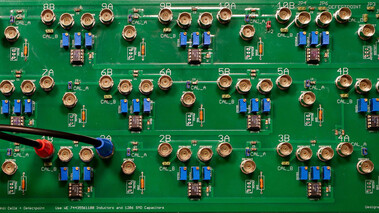
  • Nahaufnahme einer Platine mit elektrischen Schaltungen, Bauteilen und LEDs für topolektrische Forschung.

    Topolectrical circuits: A new direction of topological research is ready for take off

    Through a recently developed experimental platform, topological matter can be realized in a fast, cost efficient, and versatile way. It was only about two years ago that researchers of the Cluster of Excellence ct.qmat realized "Topolectric Circuits" and did important pioneering work on their conceptualization for synthetic topological matter. Another breakthrough has now been achieved by the team led by Würzburg physicist Prof. Dr. Ronny Thomale.

  • Lorem ipsum dolor sit amet, consetetur sadipscing elitr, sed diam nonumy eirmod tempor invidunt ut labore et dolore magna aliquyam erat, sed diam voluptua. At vero eos et accusam et justo duo dolores et ea rebum. Stet clita kasd gubergren, no sea takimata

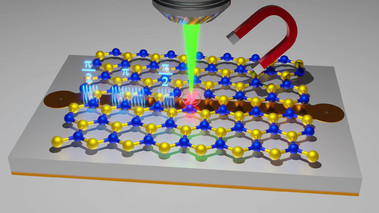
    Spins under control

    Extremely sensitive quantum sensors have great potential to revolutionize medical imaging, navigation and information technology. An international researcher team led by scientists from the Cluster of Excellence ct.qmat has made a breakthrough that could shorten the path to this goal greatly.

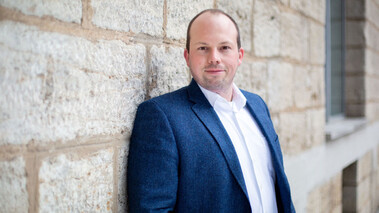
  • Porträt von Sebastian Klembt in blauem Sakko vor einer Sandsteinwand, leicht lächelnd.  Dateiname: reinraumlabor-video-screenshot-20210226.jpg

    Light and matter: Photonics scientist to occupy the cluster's first junior professorship

    Since a Nature article in 2018, experts have been looking forward to photonic quantum physics from Würzburg. Sebastian Klembt played a key role in the presentation of the first topological isolator made of light and matter. The scientist has been the first junior professor in the Cluster of Excellence since November 2020.

    A funnel of light

    The group of Professor Ronny Thomale at the University of Würzburg, in joint collaboration with the experimental optics group of Professor Alexander Szameit in Rostock, has developed a light funnel system which might inspire new generations of hypersensitive optical detectors and sensors for future information and communication technologies. Their results have just been published in Science magazine.

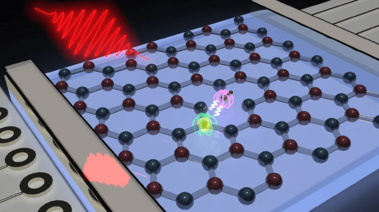
  • Initalization-Readout-Spin

    Initialization and read-out of intrinsic spin defects in a van der Waals crystal at room temperature

    The Dyakonov group observed spin centers for the first time experimentally in 2D-materials. As decribed in Nature Materials, they have potential as possible roomtemperature qbits.

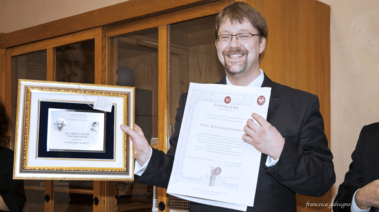
  • Prof-A-Szameit-Mit-Urkunden-Tomassoni-Preis-W1680

    Renowned Tomassoni prize for Alexander Szameit
    For his groundbreaking research in different areas of fundamental research our associate Alexander Szameit from Rostock University reveives the "Tomassoni Prize" of the Sapienza University Rome.