

Quantum Matter Academy
The Quantum Matter Academy is ctd.qmat’s hub for developing the next generation of quantum scientists. Bringing together PhD students and postdocs from around the world, the QMA fosters collaboration across Würzburg and Dresden through research training, and vibrant networking events. With structured programs, quality supervision, and various other initiatives, the QMA equips emerging researchers with both scientific excellence and essential professional skills for impactful careers in quantum matter.
The resources available to you as a QMA member include:
If you have any questions about these activities or the QMA in general, don’t hesitate to contact our QMA coordinators — Kerstin Brankatschk at TU Dresden or Katharina Klug at JMU Würzburg.
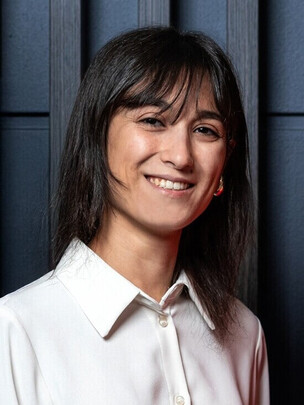
Francesca Paoletti
Steering CommitteeI’m a postdoc researcher in the Computational Quantum Materials Group led by Professor Sangiovanni at JMU Würzburg. My research explores the effects of electronic correlations in topological materials, using computational techniques such as auxiliary rotors and DMFT. I’m also interested in topological phase transitions and aim to describe them through paradigms analogous to the Landau–Ginzburg framework.
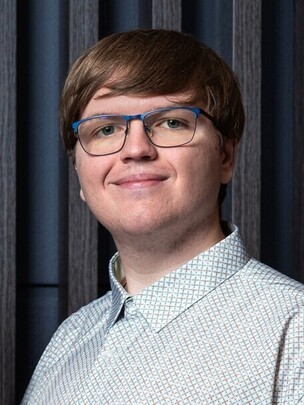
Victor Teodor Cozea
Steering CommitteeI’m a PhD student in Professor Michael Ruck’s group at TU Dresden, working on bismuth-rich weak topological insulators. Unlike their strong counterparts, these 3D materials exhibit edge — rather than surface — topological states. My research involves synthesizing quaternary crystal compositions using heating profiles optimized through differential scanning calorimetry, and characterizing them via X-ray diffraction, SEM-EDX, DFT, and electrical transport and magnetization measurements.
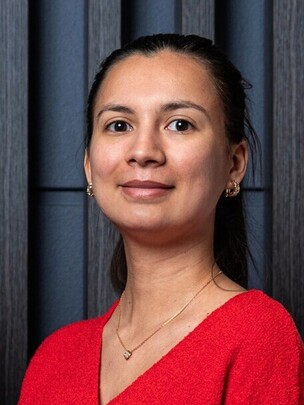
Tatiana Uaman Svetikova
Flex Fund Selection CommitteeI’m a PhD student, soon to transition into a postdoctoral role, in Dr. Georgy Astakhov’s group. My research focuses on HgTe — a fascinating, tunable material that displays topological properties under specific conditions. We obtain these structures from the Molenkamp group at JMU Würzburg, one of the few groups worldwide capable of producing them for research. I investigate THz nonlinear effects such as third-harmonic generation and four-wave mixing, as well as the dynamics of Dirac fermions, including their relaxation and scattering processes.
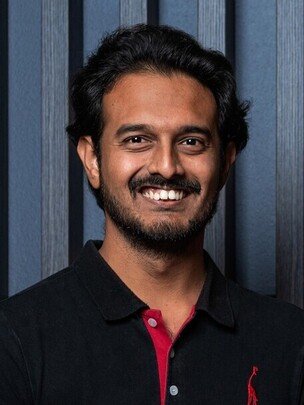
Sameran Banerjee
FlexFund Selection CommitteeI’m a PhD student supervised by Professor Matthias Bode, Chair of Experimental Physics II at JMU Würzburg. My research focuses on how illumination affects the superconducting gap of materials and interfaces at low temperatures, using scanning tunneling microscopy and spectroscopy. I’ve always been intrigued by how electronic interactions respond to external perturbations and how many-body effects manifest on a macroscopic scale. Outside the lab, I find peace in music and nature walks. Being part of QMA and ctd.qmat gives me the chance to share experiences and learn from the diverse ideas, cultures, and perspectives within our community and beyond.