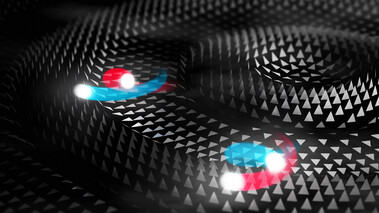

Curtain up for ctd.qmat! We’re celebrating our new name with a custom quantum groove by loop artist Konrad Kuechenmeister.

News

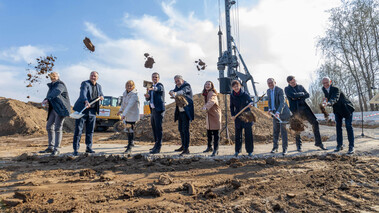
  • Gruppe von Personen mit Spaten bei einem symbolischen Spatenstich auf einem freien Gelände.

    Groundbreaking ceremony for new joint research facility of IFW Dresden and TU Dresden

     Construction is now officially underway on a new research building that will house both the Cluster of Excellence ct.qmat and the Leibniz Institute for Solid State and Materials Research Dresden – creating a world-class hub for international research into quantum materials.

    Kitty Q – A Quantum Adventure: Germany’s First Quantum Physics Escape Room for Children Opens in Dresden

    +++ Cluster of Excellence ct.qmat unveils Germany’s first quantum physics-themed escape room for youngsters in Dresden +++ Kitty Q – A Quantum Adventure at Technische Sammlungen Dresden offers a gamified exploration of quantum physics +++ Michael Kretschmer, Prime Minister of the Free State of Saxony, has agreed to act as patron +++

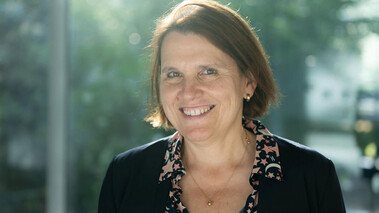
  • Claudia Felser im Porträt vor verschwommenem Hintergrund, draußen bei Tageslicht.

    Claudia Felser Awarded the 2023 EPS Europhysics Prize for Pioneering Scientific Work

    The European Physical Society presented this award to celebrate the “seminal contributions to the classification, prediction, and discovery of novel topological quantum materials.” Claudia Felser is one of the 25 principal investigators of the Cluster of Excellence ct.qmat.

    Teaching award for Elena Hassinger: Unpacking the impact of gender stereotypes on scientific careers

    Dresden-based cluster professor Elena Hassinger has received TU Dresden’s 2023 Diversity-Aware Teaching Award for her interdisciplinary seminar “The Big Bang Theory Syndrome: Why should we care about stereotypes?” The English-language seminar aims to raise students‘ awareness of gender stereotypes, sharpen their perception, and professionalize their interactions.

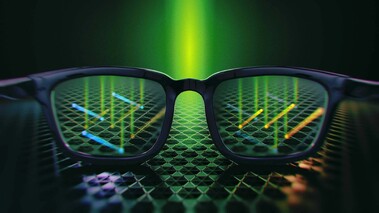
  • Breitbildaufnahme einer Brille mit grüner Reflexion digitaler Linien auf den Gläsern.

    “3D glasses” for topological materials: Using hi tech to illuminate quantum mysteries

    In a breakthrough akin to the effects of 3D cinema, scientists are using light particles to uncover the mysteries of electron behavior and propel our understanding of quantum materials forward. These materials, rich with potential for energy-efficient electronics and cutting-edge technology of tomorrow, are distinguished by their topological properties that could rarely be measured directly – until now.

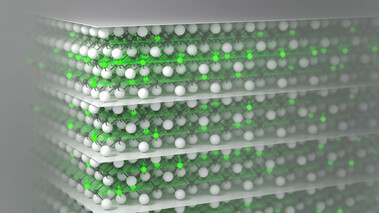
  • Pressebild-Mnbi6te10-Byjoergbandmann-1920x1080

    Surprise in the quantum world: Disorder leads to ferromagnetic topological insulator

    Magnetic topological insulators are an exotic class of materials that conduct electrons without any resistance at all and so are regarded as a promising breakthrough in materials science. Researchers from the Cluster of Excellence ct.qmat have achieved a significant milestone in the pursuit of energy-efficient quantum technologies by designing the ferromagnetic topological insulator MnBi6Te10.

    New quantum professor in Dresden: With record low temperatures into the hotspot of solid state physics

    Elena Hassinger has been appointed Professor of Low-Temperature Physics of Complex Electron Systems at the Cluster of Excellence ct.qmat. The professorship has been newly established at TU Dresden. The researcher is an expert in solid-state physics at very low temperatures down to 0.01 Kelvin (-273.14 °C). She studies unusual quantum phenomena that only occur in the freezing cold, with the focus currently being on cerium rhodium arsenic (CeRh2As2) – a promising unconventional superconductor.

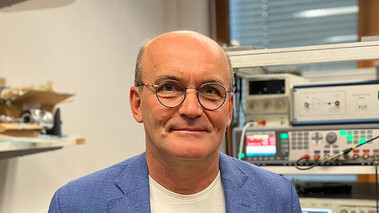
  • Porträt von Dr. Dyakonov im Labor mit wissenschaftlichen Geräten, anlässlich eines ERC Grants.

    ERC Advanced Grant for Vladimir Dyakonov

    With 2.5 million euros from the European Research Council, Professor Vladimir Dyakonov will be able to pursue the development of a novel quantum sensor: The physicist was awarded an ERC Advanced Grant.

  • Weiße Katze mit digital überlagertem Muster im Fell, auf hellem Hintergrund.

    New fur for the quantum cat: Entanglement of many atoms in a quantum material discovered for the first time

    Be it magnets or superconductors: materials are known for their various properties. However, these properties may change spontaneously under extreme conditions. Researchers at the Technische Universität Dresden and the Technische Universität München have discovered an entirely new type of such phase transitions. They display the phenomenon of quantum entanglement involving many atoms, which previously has only been observed in the realm of few atoms. The results were recently published in the scientific journal Nature.

  • Skyrmionen-Abb1-1920x1080

    Whirlwind in the material: Dresden physicist wins prize for world's first image of a 3D magnetic field

    A Dresden research team led by solid-state physicist Dr. Axel Lubk has succeeded in imaging the magnetic field of tiny magnetic nanovortices – called skyrmions – in three dimensions with a resolution of seven millionths of a millimeter. This is the first time ever that this has been achieved.

  • Schematische Darstellung einer topologischen Struktur mit Lichtreflexion auf Quadern.

    Almost everything is topological

    An international research team has discovered that topological electronic states are present in nearly every known material. The team’s discovery of ubiquitous band topology has been published in the journal Science.

  • Visualisierung einer FRG-Materialstruktur mit VO-Gitter und chemischen Elementen.

    A ‘fast lane’ for electrons

    The study of ultra-pure materials still has many ways to surprise and delight! For delafossite metals it was shown that wires sculpted from the same single crystal have very different resistivities depending on the angle at which they are cut. From the fundamental physics point of view, the laws of bulk resistivity are being broken.