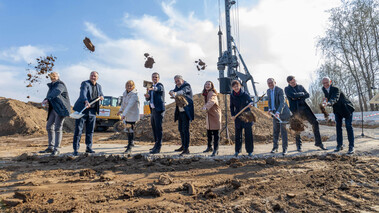

Construction is now officially underway on a new research building that will house both the Cluster of Excellence ct.qmat and the Leibniz Institute for Solid State and Materials Research Dresden – creating a world-class hub for international research into quantum materials.
+++ Cluster of Excellence ct.qmat unveils Germany’s first quantum physics-themed escape room for youngsters in Dresden +++ Kitty Q – A Quantum Adventure at Technische Sammlungen Dresden offers a gamified exploration of quantum physics +++ Michael Kretschmer, Prime Minister of the Free State of Saxony, has agreed to act as patron +++
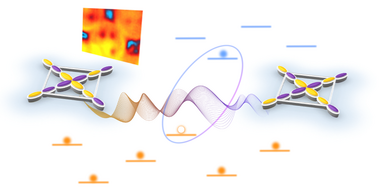
Würzburg physicists of the Cluster of Excellence ct.qmat have discovered that quantum entanglement toughens up quasiparticles against impurity scattering – even when they are subject to strong disorder.
The Würzburg-Dresden Cluster of Excellence ct.qmat hosted a German-Japanese workshop on February 26 and 27, 2024, setting the course for close collaboration between researchers from both countries. Around 70 participants from Germany and Japan convened in Würzburg to discuss their latest findings in quantum physics research. Organized by ct.qmat and supported by the Japan Science and Technology Agency (JST), the workshop delved into areas such as topology, photonics, magnetism, and the dynamics of electron correlation in solids. This exchange of ideas paved the way for joint projects in the coming years.
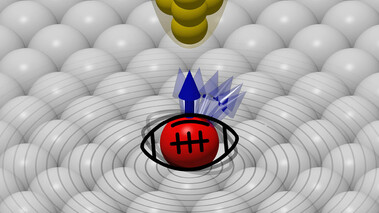
For the first time, experimental physicists from the Würzburg-Dresden Cluster of Excellence ct.qmat have demonstrated a new quantum effect aptly named the “spinaron.” This revelation challenges the long-held Kondo effect – a theoretical concept which has been considered the standard model for the interaction of magnetic materials with metals since the 1980s. These groundbreaking findings were published in the esteemed journal Nature Physics.
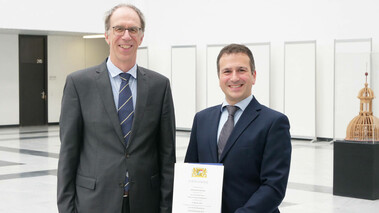
Giorgio Sangiovanni specializes in the computational analysis of quantum materials. He now heads the recently established Chair in Computational Quantum Materials at ct.qmat’s Würzburg branch, backed by €1.5 million in funding from the Bavarian State Ministry of Science and the Arts.
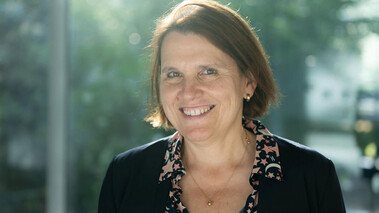
The European Physical Society presented this award to celebrate the “seminal contributions to the classification, prediction, and discovery of novel topological quantum materials.” Claudia Felser is one of the 25 principal investigators of the Cluster of Excellence ct.qmat.
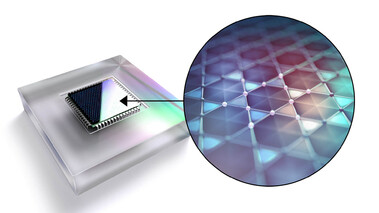
A team of five, headed by quantum physicist Professor Ronny Thomale of the Cluster of Excellence ct.qmat based at two universities in Würzburg and Dresden, secured second place in the international IBM Quantum Open Science Prize. The research group devised an algorithm enabling IBM’s 16-qubit quantum chip to be trained to outperform conventional computing capabilities.
This summer, the Hubland Campus of the Julius-Maximilians-Universität Würzburg became a hub for female quantum physicists from around the globe. From July 31 to August 2, 2023, they gathered at the behest of the Grete Hermann Network, part of the Würzburg-Dresden Cluster of Excellence ct.qmat.
Dresden-based cluster professor Elena Hassinger has received TU Dresden’s 2023 Diversity-Aware Teaching Award for her interdisciplinary seminar “The Big Bang Theory Syndrome: Why should we care about stereotypes?” The English-language seminar aims to raise students‘ awareness of gender stereotypes, sharpen their perception, and professionalize their interactions.
In a breakthrough akin to the effects of 3D cinema, scientists are using light particles to uncover the mysteries of electron behavior and propel our understanding of quantum materials forward. These materials, rich with potential for energy-efficient electronics and cutting-edge technology of tomorrow, are distinguished by their topological properties that could rarely be measured directly – until now.
The Collaborative Research Center ToCoTronics in condensed matter physics will be extended for four more years. The German Research Foundation is funding it with 12 million euros.