
The Würzburg-Dresden Cluster of Excellence ct.qmat hosted a German-Japanese workshop on February 26 and 27, 2024, setting the course for close collaboration between researchers from both countries. Around 70 participants from Germany and Japan convened in Würzburg to discuss their latest findings in quantum physics research. Organized by ct.qmat and supported by the Japan Science and Technology Agency (JST), the workshop delved into areas such as topology, photonics, magnetism, and the dynamics of electron correlation in solids. This exchange of ideas paved the way for joint projects in the coming years.
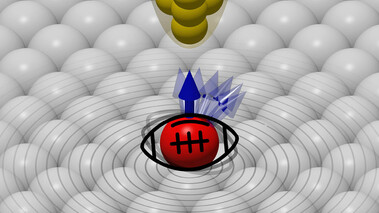
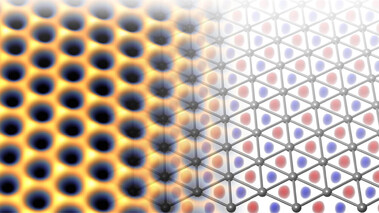
For the first time, experimental physicists from the Würzburg-Dresden Cluster of Excellence ct.qmat have demonstrated a new quantum effect aptly named the “spinaron.” This revelation challenges the long-held Kondo effect – a theoretical concept which has been considered the standard model for the interaction of magnetic materials with metals since the 1980s. These groundbreaking findings were published in the esteemed journal Nature Physics.
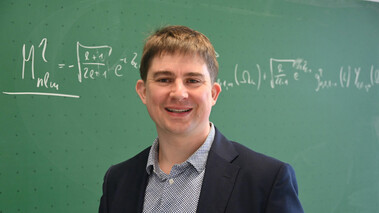
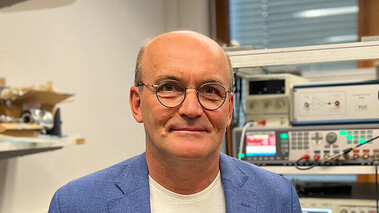
Giorgio Sangiovanni specializes in the computational analysis of quantum materials. He now heads the recently established Chair in Computational Quantum Materials at ct.qmat’s Würzburg branch, backed by €1.5 million in funding from the Bavarian State Ministry of Science and the Arts.
A team of five, headed by quantum physicist Professor Ronny Thomale of the Cluster of Excellence ct.qmat based at two universities in Würzburg and Dresden, secured second place in the international IBM Quantum Open Science Prize. The research group devised an algorithm enabling IBM’s 16-qubit quantum chip to be trained to outperform conventional computing capabilities.
This summer, the Hubland Campus of the Julius-Maximilians-Universität Würzburg became a hub for female quantum physicists from around the globe. From July 31 to August 2, 2023, they gathered at the behest of the Grete Hermann Network, part of the Würzburg-Dresden Cluster of Excellence ct.qmat.
The Collaborative Research Center ToCoTronics in condensed matter physics will be extended for four more years. The German Research Foundation is funding it with 12 million euros.
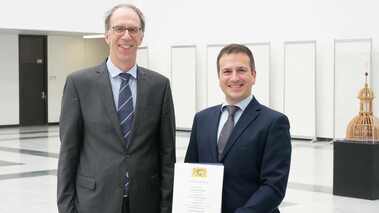
15 lecturers receive the "Prize for Good Teaching" from the Bavarian Ministry of Science. A physicist from ct.qmat at Würzburg is among them.
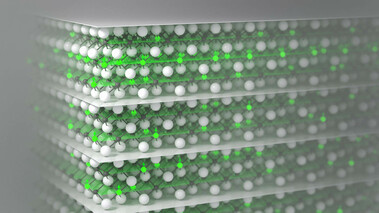
Magnetic topological insulators are an exotic class of materials that conduct electrons without any resistance at all and so are regarded as a promising breakthrough in materials science. Researchers from the Cluster of Excellence ct.qmat have achieved a significant milestone in the pursuit of energy-efficient quantum technologies by designing the ferromagnetic topological insulator MnBi6Te10.
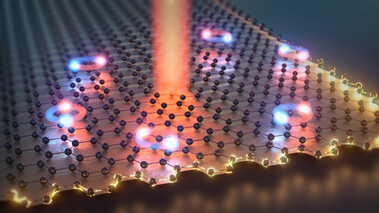
An international team of scientists collaborating within the Würzburg-Dresden Cluster of Excellence ct.qmat has achieved a breakthrough in quantum research – the first detection of excitons in a topological insulator. The findings have been published in the journal Nature Communications.
With 2.5 million euros from the European Research Council, Professor Vladimir Dyakonov will be able to pursue the development of a novel quantum sensor: The physicist was awarded an ERC Advanced Grant.
Be it magnets or superconductors: materials are known for their various properties. However, these properties may change spontaneously under extreme conditions. Researchers at the Technische Universität Dresden and the Technische Universität München have discovered an entirely new type of such phase transitions. They display the phenomenon of quantum entanglement involving many atoms, which previously has only been observed in the realm of few atoms. The results were recently published in the scientific journal Nature.
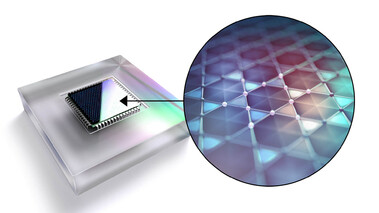
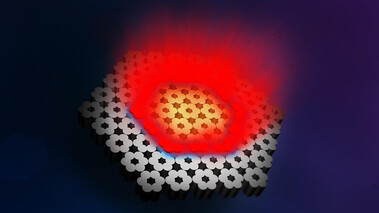
The development of a topological laser array by a research team of the Wuerzburg-Dresden Cluster of Excellence ct.qmat represents a pioneering achievement in physics. For this groundbreaking work, Sebastian Klembt from the Julius Maximilians University Wuerzburg has now been shortlisted for the prestigious “Falling Walls Science Breakthrough of the Year.”