
News
-
![Screenshot eines Videos aus einem Reinraumlabor mit gelber Beleuchtung, Forscher an Computerarbeitsplätzen.]()
Quantum world for everyone!
-
![20210121-Schwarzeloecheraushalbmetallen-Abbildungpixelwg-Joergbandmann-1920x1080]()
1 million Euros for black holes made from semimetals
-
![Porträt von Sebastian Klembt in blauem Sakko vor einer Sandsteinwand, leicht lächelnd. Dateiname: reinraumlabor-video-screenshot-20210226.jpg]()
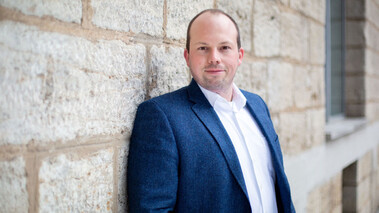
Light and matter: Photonics scientist to occupy the cluster's first junior professorship
-
![Farbliche Darstellung einer elektronischen Bandstruktur mit Energieniveaus und Übergängen.]()
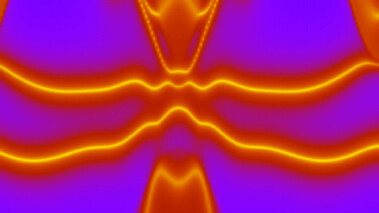
Find a needle in the haystack: A new high-throughput method for magnetic quantum materials
-
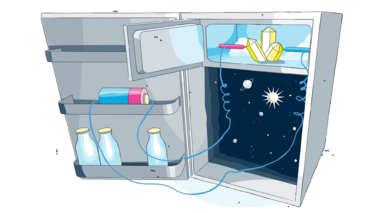
![Illustration eines Kühlschranks im Weltall mit gezeichnetem Innenleben und Sternenhimmel im Hintergrund.]()
Freeze like a star! Web exhibition explores the mysteries of the quantum world
-
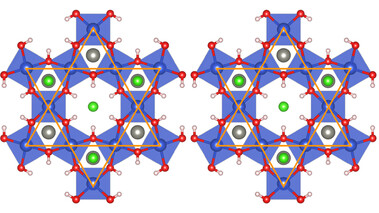
![20200917-Herbertsmithite-Doppelt-1920x1080]()
Quantum honey from black holes
-
![Hand hält einen torusförmigen Gegenstand aus braunen Fasern vor blauem Hintergrund.]()
Opening of the exhibition SHOWCASES OF RESEARCH
-
![Pixabay-Fractal-1147253-1920-Webheader]()
With a bang towards new quantum technologies
-
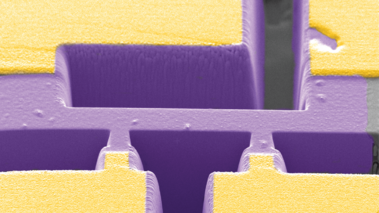
![Headerbild mit Strukturen aus der Elektronenmikroskopie]()
'Wow' research: Quantum physics observed in ultrapure metals
-
![Überarbeitete Headergrafik des Zeitgeist-Projekts mit Fokus auf dreidimensionaler Darstellung.]()
Superconductors with ‘zeitgeist’: When materials differentiate between the past and the future
-
![Initalization-Readout-Spin]()
Initialization and read-out of intrinsic spin defects in a van der Waals crystal at room temperature